
Leave Your Message
The modern beverage industry is undergoing a massive transformation, particularly in the realm of Neutral Dairy Beverages. Operating typically at a pH range of 6.5 to 7.2, these products—which include RTD (Ready-To-Drink) coffees, flavored milks, high-protein shakes, and plant-based dairy alternatives—present unique formulation challenges. Unlike acidic beverages where protein precipitation is a primary concern managed by pectin or CMC, neutral dairy requires robust stabilization against thermal stress (like UHT or retort processing) and the prevention of particle sedimentation over long shelf lives. This is where the Microcrystalline Cellulose (MCC) Functional Series emerges as a critical, high-tech ingredient.
Derived from highly purified plant pulp, Microcrystalline Cellulose is not merely a thickener; it is a sophisticated rheology modifier. Through advanced mechanical shearing and co-processing techniques, MCC forms an invisible, three-dimensional colloidal network when dispersed in water. This intricate lattice structure acts as a physical barrier, effectively suspending insoluble particles—such as cocoa powder, calcium carbonates, and insoluble proteins—without imparting a gummy or overly viscous mouthfeel. In an era where consumers demand clean, refreshing textures coupled with rich nutritional profiles, the MCC Functional Series stands at the forefront of food science.
The global market for dairy stabilizers is experiencing unprecedented growth, driven by the booming RTD beverage sector. Manufacturers are scaling up production to meet the demand for ambient-stable products that do not require cold-chain logistics, making MCC an indispensable commercial asset.
Industrial applications are shifting towards clean-label and sustainable sourcing. Modern MCC processing utilizes AI-driven optimization to ensure consistent particle size distribution, maximizing yield and functionality while minimizing energy consumption during the homogenization process.
Nanotechnology and molecular mapping are now being integrated into the development of composite cellulose series. By understanding the exact interaction between cellulose micro-fibrils and casein micelles, formulators can predict stability outcomes with unprecedented accuracy.

Nanchang Tellcan food Science Co., Ltd (hereinafter referred to as Tellcan Food), founded in 2001, is an excellent practitioner of compound food additives and food essence, specializing in the research and development, production and sales of food additives, and the research and development of food technology and food technology. Various types of compound food additives, edible essence and spices produced by Tellcan Food can be used in many fields such as food, beverage and dairy products.
The versatility of the Microcrystalline Cellulose Functional Series is best understood through its deep-rooted application in specific neutral dairy scenarios. Each beverage type presents a distinct physicochemical environment, requiring a tailored approach to stabilization, mouthfeel enhancement, and shelf-life extension.
One of the most challenging applications in the dairy industry is the stabilization of cocoa powder in neutral milk. According to Stokes' Law, dense cocoa particles will naturally settle over time. Traditional starches or gums often result in an undesirably thick, pudding-like consistency. The MCC Functional Series solves this by forming an insoluble, yet fully dispersed, 3D network that acts like a microscopic scaffolding. This traps the cocoa particles in suspension indefinitely, ensuring a visually appealing, homogenous product from the first sip to the last, while maintaining a refreshing, fluid mouthfeel.
As health-conscious consumers drive the demand for high-protein diets, dairy and plant-based protein shakes have surged in popularity. However, high concentrations of whey or casein isolates often lead to "age gelation"—a phenomenon where the beverage thickens and solidifies over time—or severe astringency. MCC interacts synergistically with dairy proteins to inhibit the cross-linking that causes gelation. Furthermore, the micro-particulate nature of MCC mimics the rheological properties of milk fat, providing a rich, creamy texture (fat mimetic effect) that masks the chalkiness often associated with high-protein formulations.
The rise of veganism and lactose intolerance has propelled the plant-based milk sector. These beverages often lack the natural emulsifying properties of bovine milk fat and casein. When formulating neutral plant milks, the MCC Functional Series is crucial for preventing phase separation (syneresis) and suspending insoluble plant fibers or added minerals like calcium carbonate. By utilizing advanced composite technology, Tellcan's functional series ensures that plant-based beverages achieve the opaque, creamy appearance and smooth texture that consumers expect from traditional dairy.
Ready-to-drink coffees and milk teas often undergo severe UHT (Ultra-High Temperature) processing to ensure ambient stability. This extreme heat can denature proteins, leading to flocculation and a "sand-like" defect in the beverage. The MCC Functional Series exhibits exceptional thermal stability. It protects the protein structure during the UHT process and prevents the agglomeration of fat globules, ensuring a silky, premium drinking experience that modern coffee culture demands.


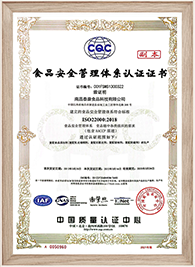
The company has implemented and maintains the HACCP 22000 Food Safety Management System, ensuring reliable products and services. To date, Tellcan has resolved technical challenges for thousands of domestic enterprises and earned prestigious recognitions.
 Council Member of China Food Additives Production and Application Industry Association Standing Council Member of Jiangxi Food Additives Association Member of China Dairy Products Industry Association Member of China Bakery & Confectionery Supplementary Materials Industry Association Member of China National Federation of Industry & Commerce Bakery Association Premium Products & Global Sourcing



The intersection of artificial intelligence and food science is paving the way for the next generation of the Microcrystalline Cellulose Functional Series. As the demand for highly specialized neutral dairy beverages grows, traditional trial-and-error formulation methods are becoming obsolete. Today, AI-driven predictive modeling is utilized to analyze the complex interactions between MCC, carrageenan, xanthan gum, and dairy proteins at a molecular level. By simulating thousands of formulation permutations in virtual environments, researchers can identify the optimal composite ratios that guarantee absolute stability under specific UHT conditions.
Furthermore, sustainability is shaping the future of industrial cellulose production. Innovations in enzymatic hydrolysis and green chemistry are allowing for the extraction of high-purity MCC from upcycled agricultural by-products, significantly reducing the carbon footprint of the supply chain. As we look ahead, the integration of smart manufacturing, real-time automated quality control, and advanced material science will ensure that the Microcrystalline Cellulose Functional Series remains the undisputed backbone of innovation in the global neutral dairy and beverage industry.
TELLCAN SCIENCE - Trusted by Industry Leaders Worldwide


